LinkedIn Social Selling: How to Turn Trust Into B2B Clients
LinkedIn Social Selling: How to Turn Trust Into B2B Clients
You polish your LinkedIn profile, you post every week, and yet your prospecting messages still go unanswered. LinkedIn social selling offers a different logic: build trust before you sell, so prospects respond positively when you reach out, or come to you directly.
In this guide: the exact definition of social selling, the four pillars it rests on, a five-step method to put it in place, and how to measure whether it produces results.
What is social selling on LinkedIn?
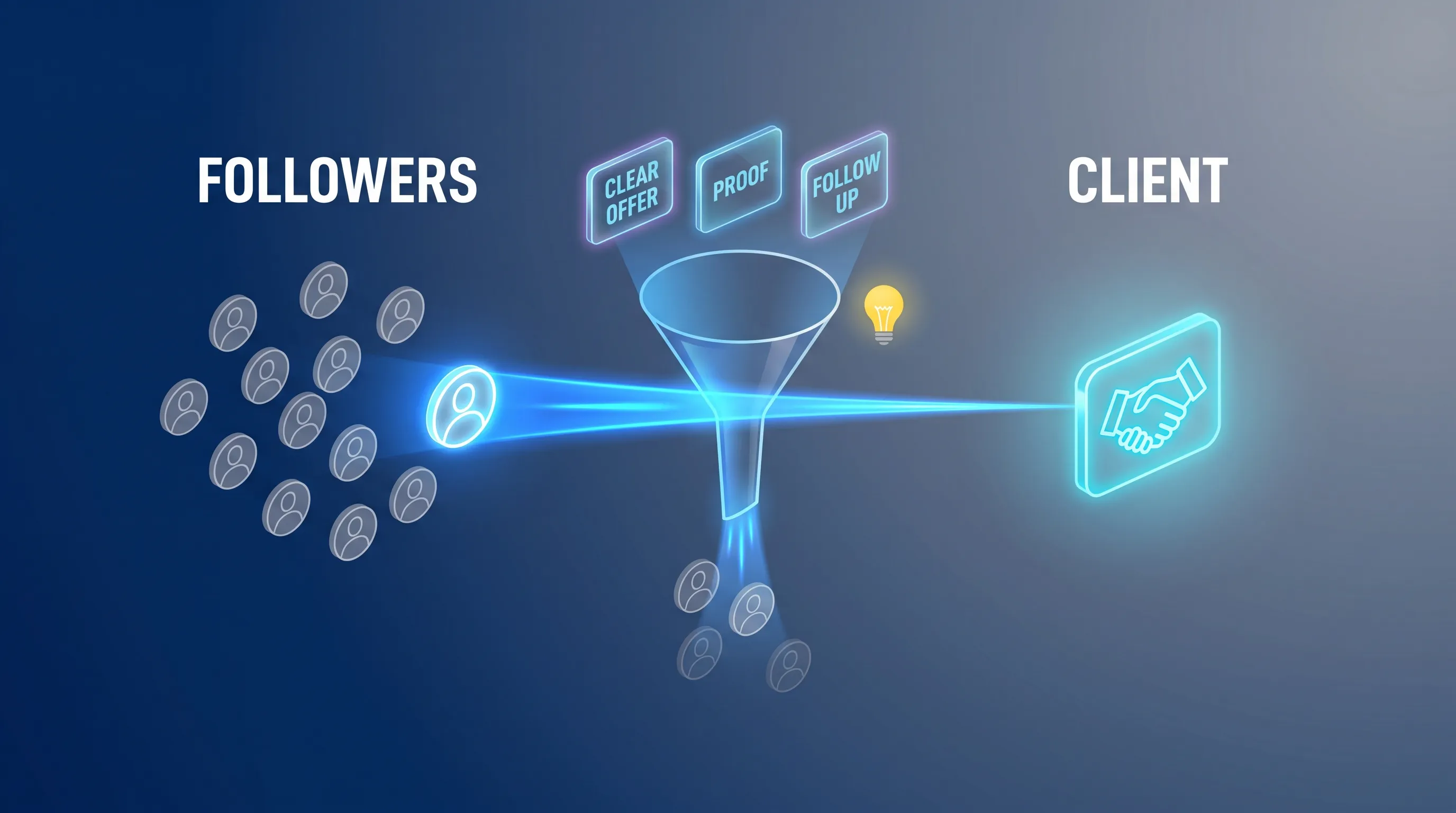
Social selling means using your profile and your activity on LinkedIn (published content, comments, introductions) to build trust with your prospects, even before the first sales contact. It is not an alternative to prospecting: it is what makes prospecting work, by making sure a message lands on ground that is already prepared rather than cold.
Social selling should not be confused with two neighboring practices. Social media marketing addresses a broad audience to build a brand image, not an individual relationship with a specific prospect. Mass message automation (generic InMails, sequences sent to hundreds of identical profiles) is not social selling either: it keeps the form without the trust, and usually gets very low response rates.
Take a sales manager selling HR software to HR directors at small and mid-sized companies. With a classic approach, she sends a prospecting message to 50 profiles found through a Sales Navigator filter. With social selling, she has already commented on three of her targets' posts this month, published a post on an HR topic they follow, and her outreach message mentions a real point in common. The response rate is in a different league.
Why social selling works better than cold prospecting
The figures LinkedIn has published on the subject are telling, even if they should be read as trends rather than individual guarantees.
45%
more sales opportunities for social sellers, according to LinkedIn
51%
more likely to hit their sales quota
8 in 10
B2B buyers research on social media before purchasing (IDC study)
The reason is simple: a B2B buyer who has already seen your name, read one of your posts or come across one of your comments does not start from zero when you reach out. You are no longer a stranger selling something, but someone whose expertise they have already noticed, which naturally shortens the decision cycle.
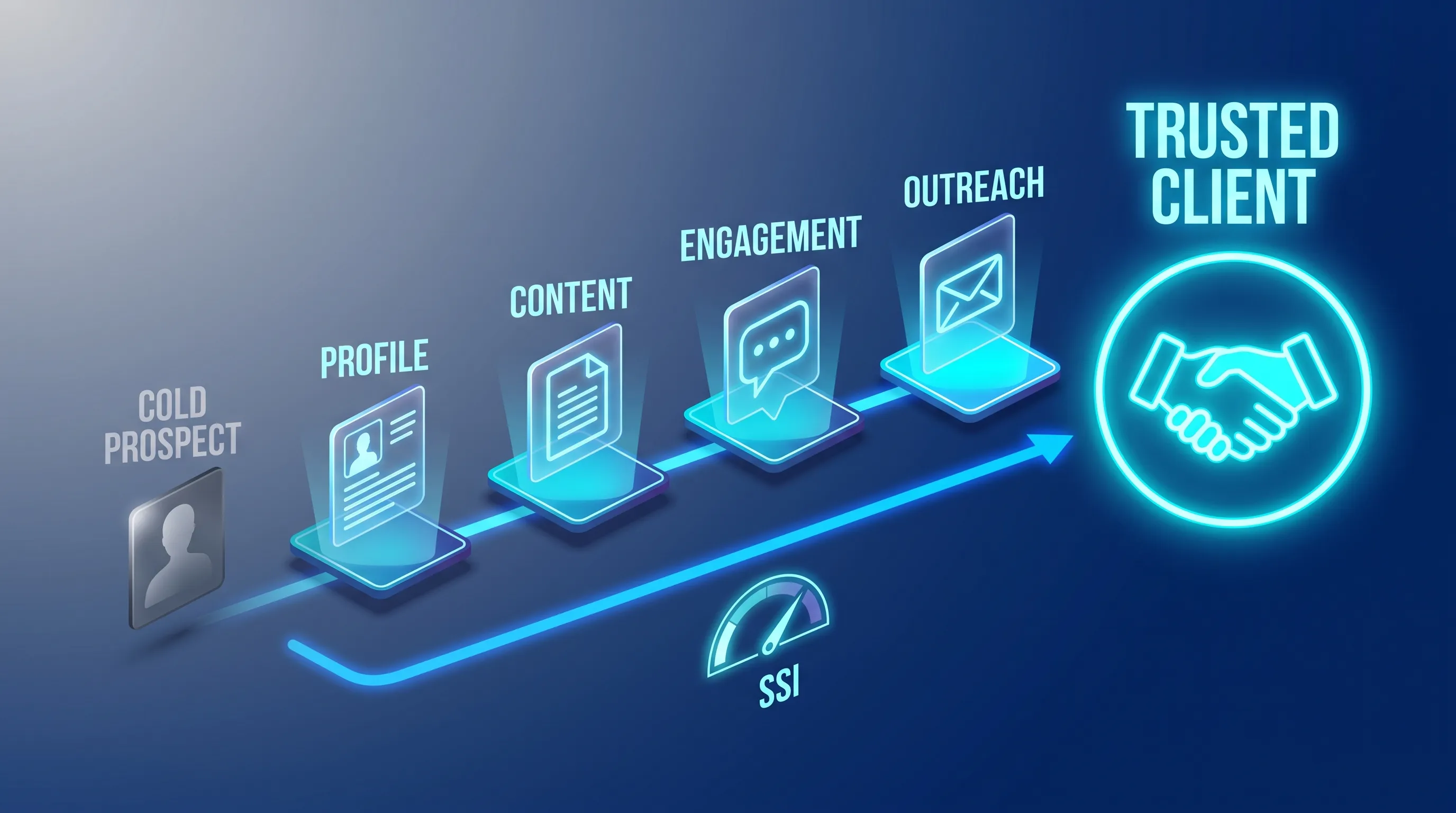
The four pillars of LinkedIn social selling
A profile that inspires trust
Before replying to a message, a prospect almost always checks the sender's profile. A professional photo, a results-oriented headline rather than a job title, an About section focused on what you bring to your clients: these are the first elements that reassure or drive people away in seconds. Our guide on how to optimize your LinkedIn profile to attract clients covers this in detail.
Content that demonstrates your expertise
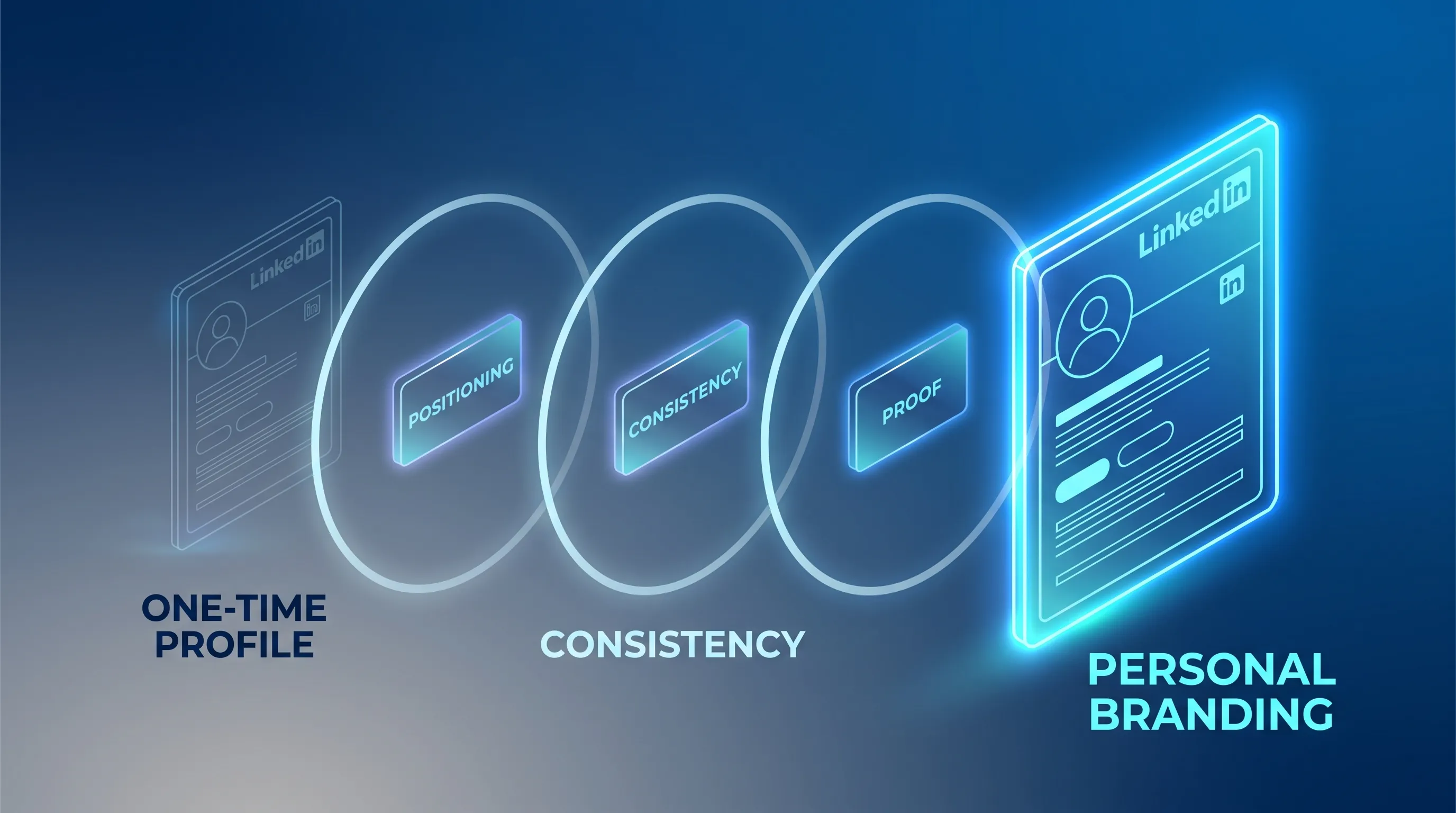
Publishing useful content regularly turns a static profile into ongoing proof of expertise. It is not about volume: three posts a week that give a real answer beat hollow daily posts. That is the whole point of personal branding on LinkedIn, which builds a consistent image post after post rather than a one-off splash.
Engagement that builds the relationship before the message
Commenting on your prospects' posts, with a real, reasoned reaction rather than a plain "Great post!", makes your name familiar before you ever write to them. It is the most frequently skipped step, even though it takes only a few minutes a day and does all the groundwork for your outreach message.
Outreach that does not sound like a pitch
Your opening message should never sell directly. It builds on a real point in common (a post, company news, a shared connection) and suggests a conversation, not a sales meeting in disguise. Keep it short, specific and easy to answer.
A 5-step method to get started
Clean up and focus your profile
Rewrite your headline and About section around the problem you solve for your clients, not around your job title.
Identify 20 to 30 target accounts
List the decision-makers and companies that match your target, and follow them so their activity shows up in your feed.
Publish at least one piece of content a week
A post that answers a real question from your audience always beats a plain news share with no personal angle.
Comment on 5 posts a day
Focus on the accounts on your target list, with a comment that adds an idea rather than a stock polite phrase.
Send one personalized message a day
Build on a real point in common, and suggest a ten-minute conversation rather than a direct sales offer.
Why monitoring is the fuel of social selling
The four pillars above have one thing in common: they require you to know, continuously, what is happening with your prospects and in your industry. Without industry monitoring, you cannot comment at the right time, publish content that reacts to real news, or find a hook for an outreach message that does not sound generic.
It is often the first link to break: manual monitoring takes time, and time is exactly what sales reps and founders already wearing several hats lack.
Measuring the impact of your social selling
LinkedIn offers a dedicated metric, the Social Selling Index (SSI), calculated on four components: the quality of your profile, the reach of your relevant network, the engagement your content generates, and the quality of your relationships. A score above 70 out of 100 is generally considered solid, and the four sub-scores are worth looking at separately: a decent SSI hiding a very low engagement sub-score signals a well-built but inactive profile.
Beyond the SSI, three indicators deserve regular tracking in your CRM: the acceptance rate of your connection requests, the response rate to your outreach messages, and the number of meetings that come directly from a LinkedIn interaction (comment, post, introduction). That last figure is what justifies the time invested, far more than views or follower counts.
For the full definition of social selling as LinkedIn positions it for sales teams, its dedicated page details the platform's approach.
Mistakes that sabotage social selling
Avoid this
Sending the same outreach message to hundreds of profiles, posting only content that praises your own product, or assuming a profile completed once is good forever: these are the three mistakes that turn social selling into disguised spam, recognizable at first glance by most B2B decision-makers.
Another, subtler mistake is aiming too wide. Following and superficially commenting on 200 accounts usually produces fewer results than following 30 truly qualified accounts, with real comments and real follow-up over time.
Finally, giving up after two weeks without results is the most common mistake. Social selling works over time: the first real opportunities usually arrive after several weeks of regular presence, not after the first three messages.
Frequently asked questions
Traditional prospecting goes straight for a meeting, by phone or message. Social selling first builds trust through content and engagement, so the outreach message lands on ground that is already prepared.
Key takeaways
Social selling is not just one technique among others, it is a change in the order of operations: build trust before you sell, rather than trying to create it in the sales message itself. The four pillars (profile, content, engagement, outreach) reinforce each other, and consistency, not one-off intensity, is what makes the difference over several months.