LinkedIn Personal Branding: A Practical Guide for 2026
LinkedIn Personal Branding: A Practical Guide for 2026
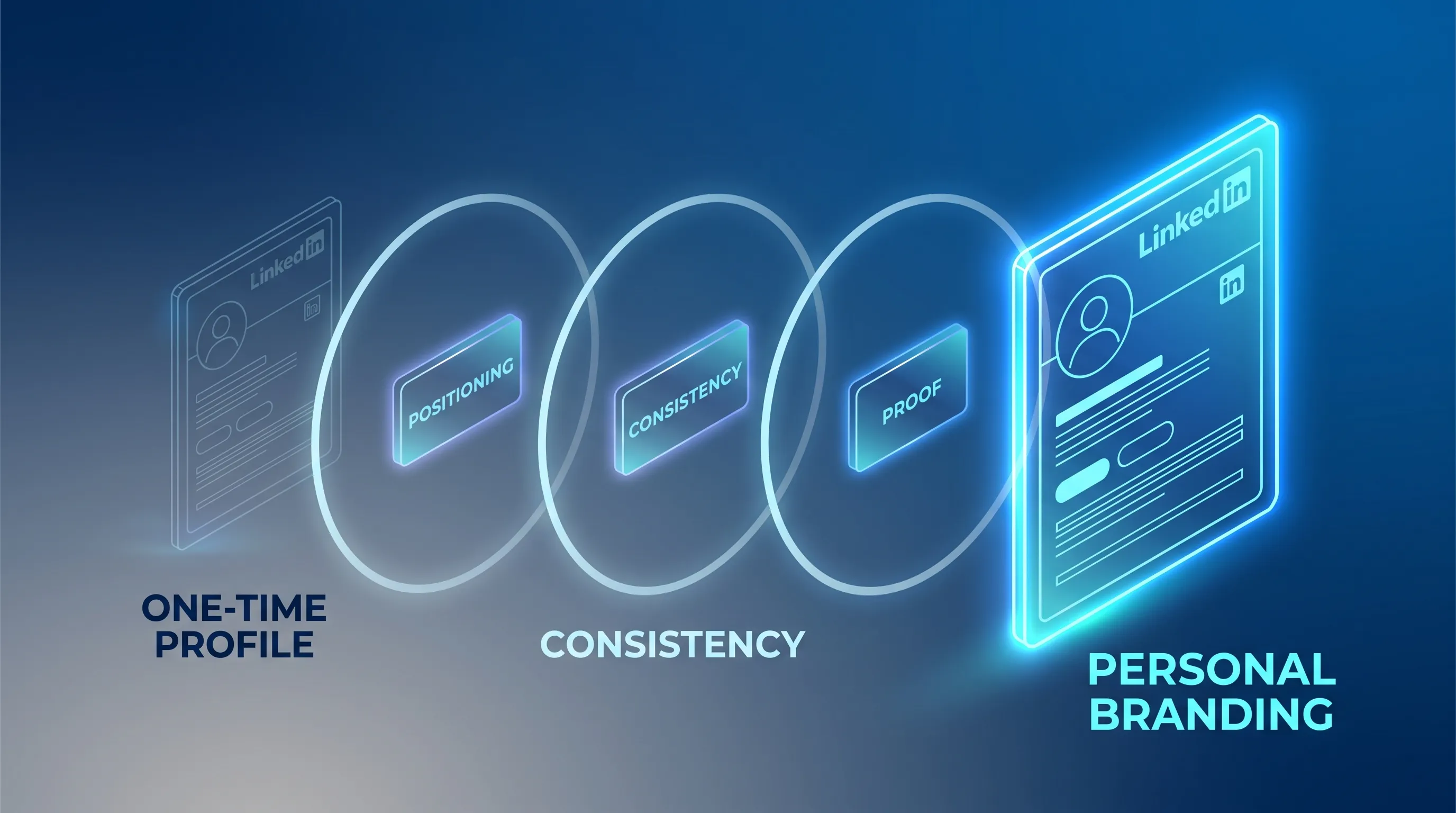
You changed your photo, rewrote your headline and added a polished banner. Three months later, nothing has moved: not your profile views, not your inbound messages, not the way people introduce you in meetings. Personal branding on LinkedIn is not a profile you touch up once. It is a position you build and maintain, one post after another.
In this guide: what personal branding really covers, the three questions to answer before you touch your profile, how to turn them into a concrete profile and content, and how to tell whether it is working.
What personal branding covers (and what it is not)
The term comes from a famous article, "The Brand Called You", published by Tom Peters in 1997: the idea that every professional manages, whether they like it or not, a reputation as deliberately built as a company brand. On LinkedIn, that reputation forms from three things: what you demonstrate (your real expertise), what you publish (your content), and what people remember once they close the page.
A complete profile is only one third of it. Many professionals stop at the photo and the headline, believe they have "done their personal branding", and are surprised that nothing changes. The profile is the business card. Personal branding happens in the regularity and consistency of what you show, week after week.
Positioning before tactics: three questions to answer first
Jumping straight into profile optimization or post writing without answering these three questions produces content that is decent but interchangeable, the kind that makes nobody remember your name.
Who are you writing for?
Not "marketing professionals" in general, but a precise profile: role, company size, the problem they face. The sharper the target, the easier it is to know what to say and what to leave out.
Where are you credible?
Three to four themes at most, the ones where your experience is hardest to copy. An account that talks about everything becomes a reference on nothing: scattering is the number one enemy of personal branding.
What proof backs what you say?
A measurable result, a project you led, a mistake you corrected, a client you helped. Without concrete proof, positioning remains a statement of intent that nothing distinguishes from dozens of similar profiles.
These three answers fit in a few lines, but they shape everything that follows: your profile headline, the topics of your posts, even the comments you choose to leave.
Translating your positioning into your profile
Once your positioning is clear, the profile becomes an exercise in translation rather than an exercise in style.
- The headline carries the benefit, not the job title. "Sales Director" says nothing about your positioning. "I help B2B sales teams shorten their sales cycle" carries it directly.
- The banner reinforces the message, it does not replace it. A generic stock image adds nothing; a visual that states your value in one sentence works for you around the clock.
- The About section tells the problem you solve, with concrete examples, not a resume written as prose.
- The Featured section shows proof, not your latest post picked at random: a client result, a talk, a piece of content that resonated with your audience.
This work is done once, then adjusted roughly every six months, as your positioning itself evolves.

Building a recognizable editorial line
This is where most personal branding efforts run out of steam. The profile is ready, the first two or three posts are polished, then the rhythm drops for lack of topics or time, and the position you built fades.
| Criterion | Profile touched up once | Maintained personal brand |
|---|---|---|
| Frequency | A one-off update | Regular posting over time |
| What the audience remembers | Nothing specific | A point of view tied to your name |
| Effect on inbound opportunities | Close to zero | Cumulative, messages arrive over time |
Keeping that regularity takes two things: a pool of topics that never runs dry, and a voice people recognize from one post to the next. The first comes from structured monitoring of your industry, which replaces hunting for ideas before every post with a few minutes of selection. The second is what Suma AI personalization learns from at least three of your own posts: the style it reproduces is yours, not a neutral default tone.
Staying recognizable without becoming a character
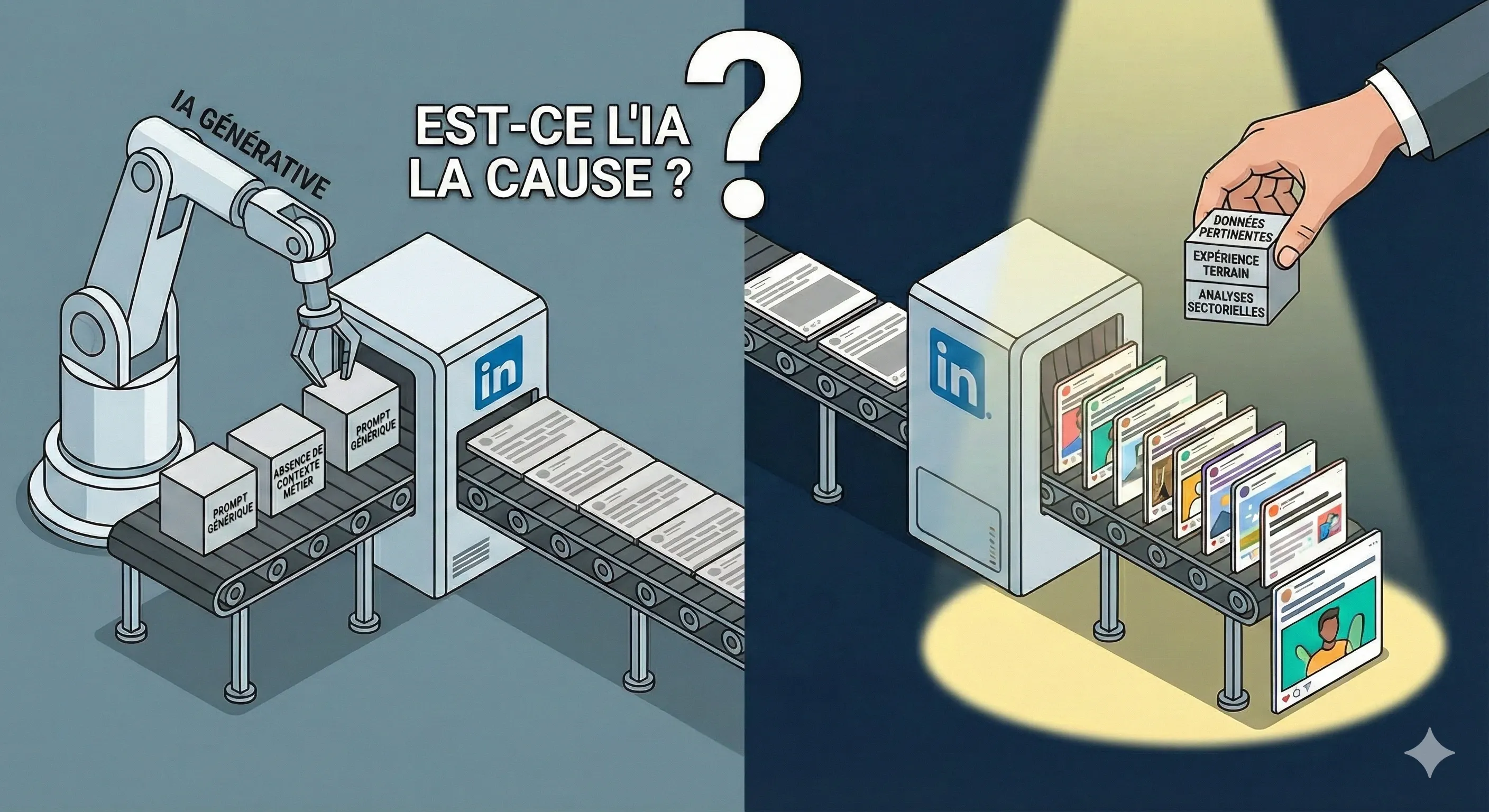
The opposite risk exists too: forcing a tone, repeating the same hook formulas, building a LinkedIn persona that no longer looks like the person behind the screen. That is what makes generic posts recognizable at first glance: clean, structured, and perfectly anonymous.
A simple test
If a colleague who knows you well read your post without seeing your name, would they recognize it as yours? If not, the post is probably more formatted than sincere.
A personal brand that lasts does not erase flaws or hesitations: it embraces them. A strong opinion, a failure told honestly, a way of phrasing things that is yours alone are worth more over time than a flawless post with no edges at all.
How long before you see results, and how to measure them
The first visible effects (profile views, inbound invitations, mentions in comments) usually appear after six to ten weeks of regular posting. Deeper effects, such as being spontaneously named as a reference on a topic, build over several months.
Three signals are worth tracking over time rather than post by post: the number of profile views coming from your stated target, the number of messages or comments that quote a point of view from an earlier post, and the share of opportunities (clients, speaking invitations, hires) that arrive without any outreach on your part. That last one is the most telling: it shows a position has taken hold beyond your direct followers.
Frequently asked questions
Expect six to ten weeks for the first signals (profile views, inbound invitations), and several months to be seen as a reference on a specific topic. Consistency matters more than speed.
Key takeaways
Personal branding on LinkedIn does not happen in a touched-up profile, but in clear positioning (for whom, on what topic, with what proof) expressed consistently in the content you publish. The profile makes the first impression, regular content builds memory, and that memory is what turns views into opportunities.
The hard part is never the strategy, it is always keeping it up over time. That is where structured monitoring and a tool that learns your style, rather than a generic tone, make the difference between a personal brand that fades and one that really grows.