How to Write Like You Speak on LinkedIn Without Losing Credibility
THE LINKEDIN STYLE: WRITE LIKE A HUMAN (WITHOUT COMING ACROSS AS AN AMATEUR)
"Write like you speak." That's the advice you hear everywhere. The problem? Many confuse it with "Write carelessly."
On LinkedIn, closeness should never sacrifice precision. If your post looks like a text message sent at 2 AM, you lose your credibility. But if it looks like an annual report, you lose your audience.
Here's how to find the right balance.
1. "Speaking" is not "Sloppiness"
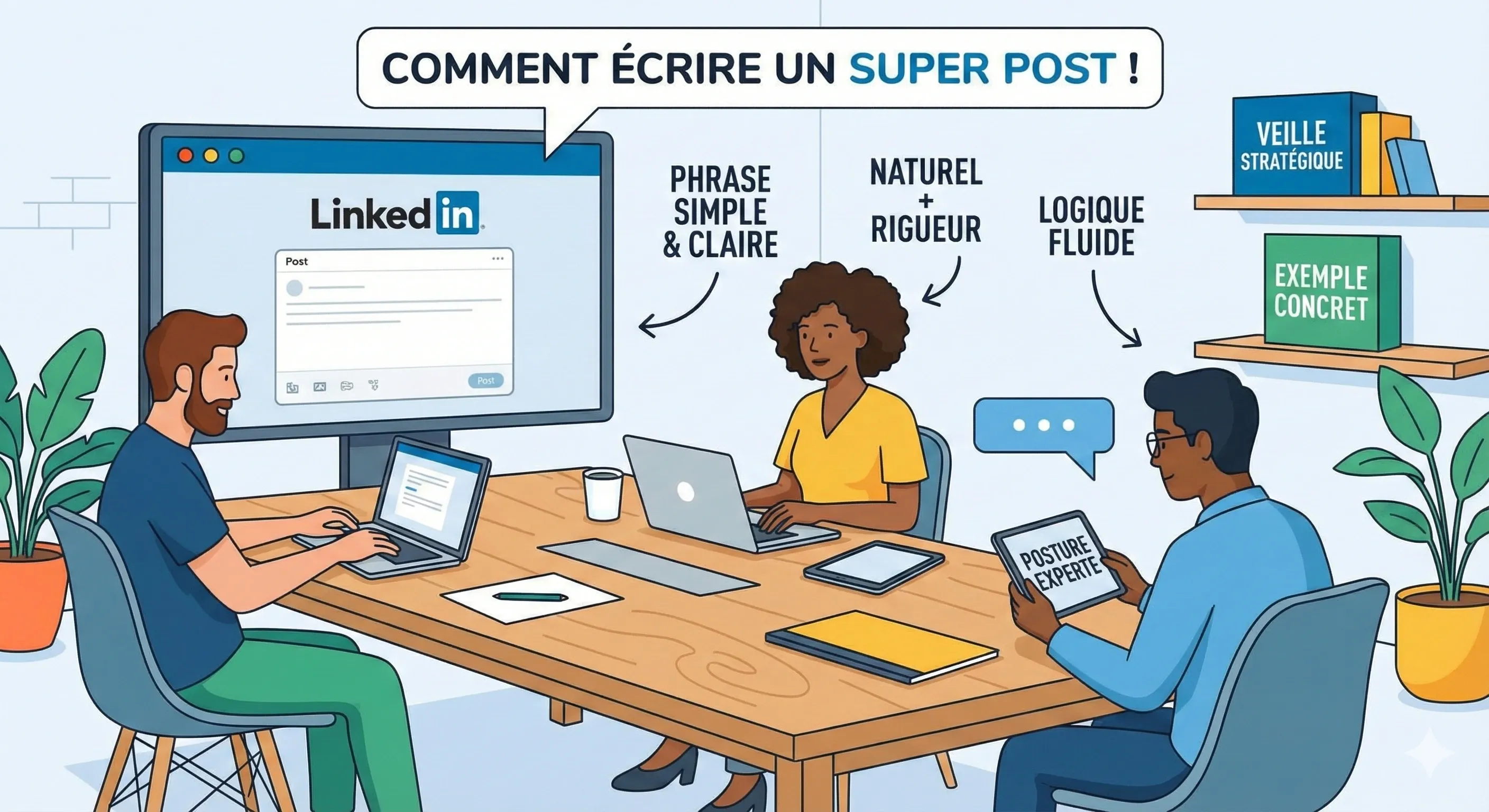
Adopting a conversational tone means removing the barrier between your brain and the reader's. It's not an excuse to forget structure.
- Eliminate jargon: If you can't explain your concept to a friend at a café, your post is too complex.
- Break up long sentences: If you have to catch your breath in the middle of a sentence while reading it, split it in two.
- The "That is to say" test: If you find yourself writing convoluted sentences to sound smart, simplify. Clarity is the true sign of expertise.
2. The Rule of Facts: The "Bullshit Detector"
A natural tone catches the eye, but it's rigor that holds attention. A "nice" but empty post remains a useless post. To be taken seriously, provide evidence.
How to Strengthen Your Message:
- Quantify your statements: Don't say "Many people...", say "67% of surveyed marketing directors...".
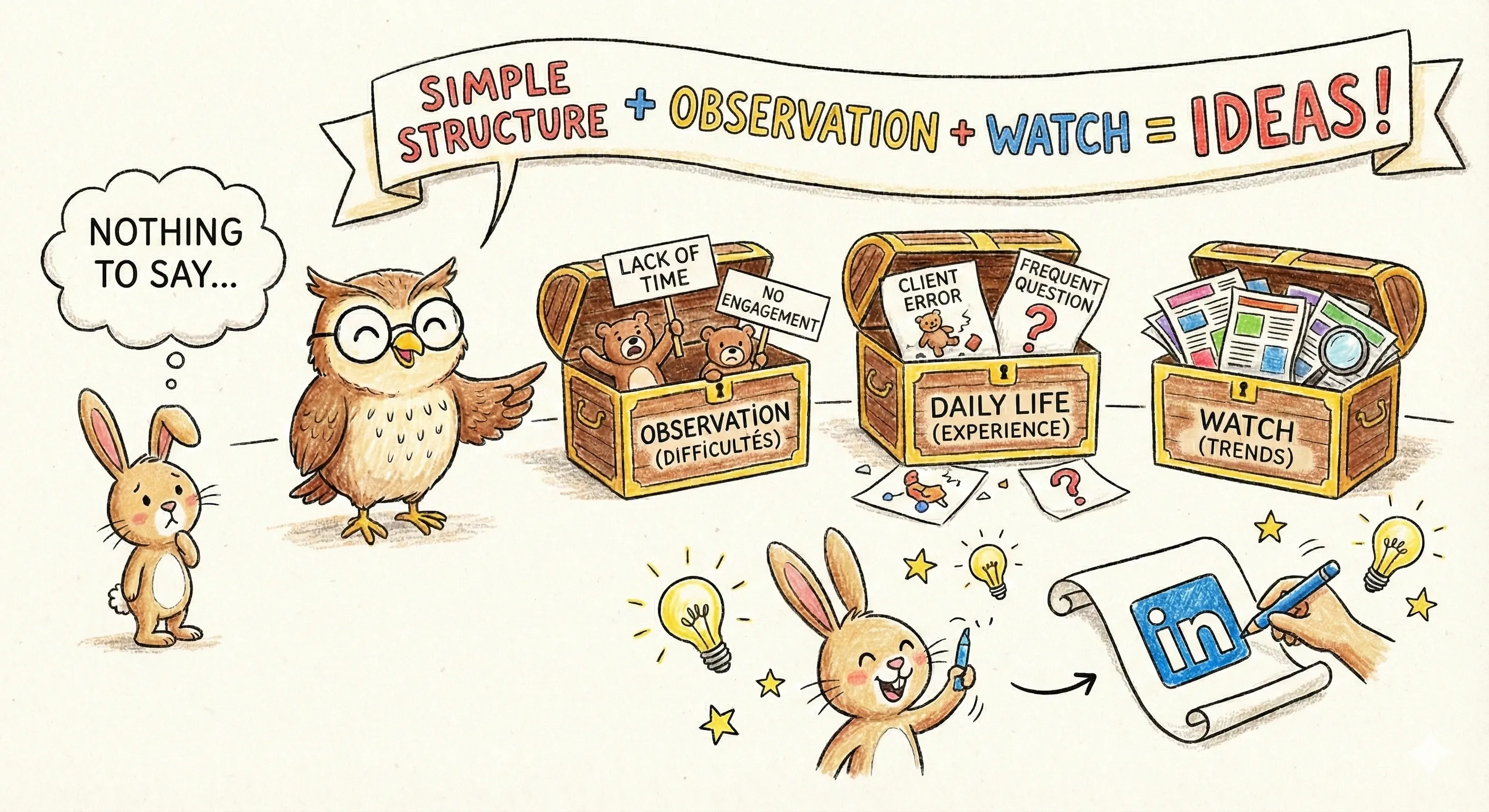
- Use your "Monitoring": Cite a recent study, an in-depth article, or a trend observed this week. It shows you're in the field.
- The concrete example: Instead of giving theoretical advice, share what happened concretely with your last client (without necessarily naming them).
3. The Balance: Natural + Rigor
The best creators don't choose between being "cool" and being "professional". They do both at the same time. This is called the "accessible expert" stance.
- Be direct: Get straight to the point from the start.
- Keep your personality: If you have a sense of humor, use it. If you're very analytical, show it. Don't try to copy LinkedIn's "generic" style.
- The engaging conclusion: Don't end on an obvious note. End with a thought that pushes the reader to act or confront their own view.
How to Test Your Text Before Publishing?
- READ IT OUT LOUD: If a sentence trips you up, rewrite it.
- REMOVE THE FAT: Get rid of "indeed", "furthermore", "it should be noted that". These words are parasites that weigh down the discourse.
- CHECK YOUR SOURCES: Is what I'm stating an opinion or a verified fact? (If it's an opinion, own it as such).
Conclusion
Credibility doesn't come from complicated words, it comes from the strength of your arguments and the clarity of your logic. Write to be understood, not to be admired. That's where the secret of content that converts lies.