Why Your LinkedIn Posts Aren't Working (and How to Fix Them)
GUIDE: WHY YOUR LINKEDIN POSTS AREN'T WORKING (AND HOW TO FIX THEM)
Introduction
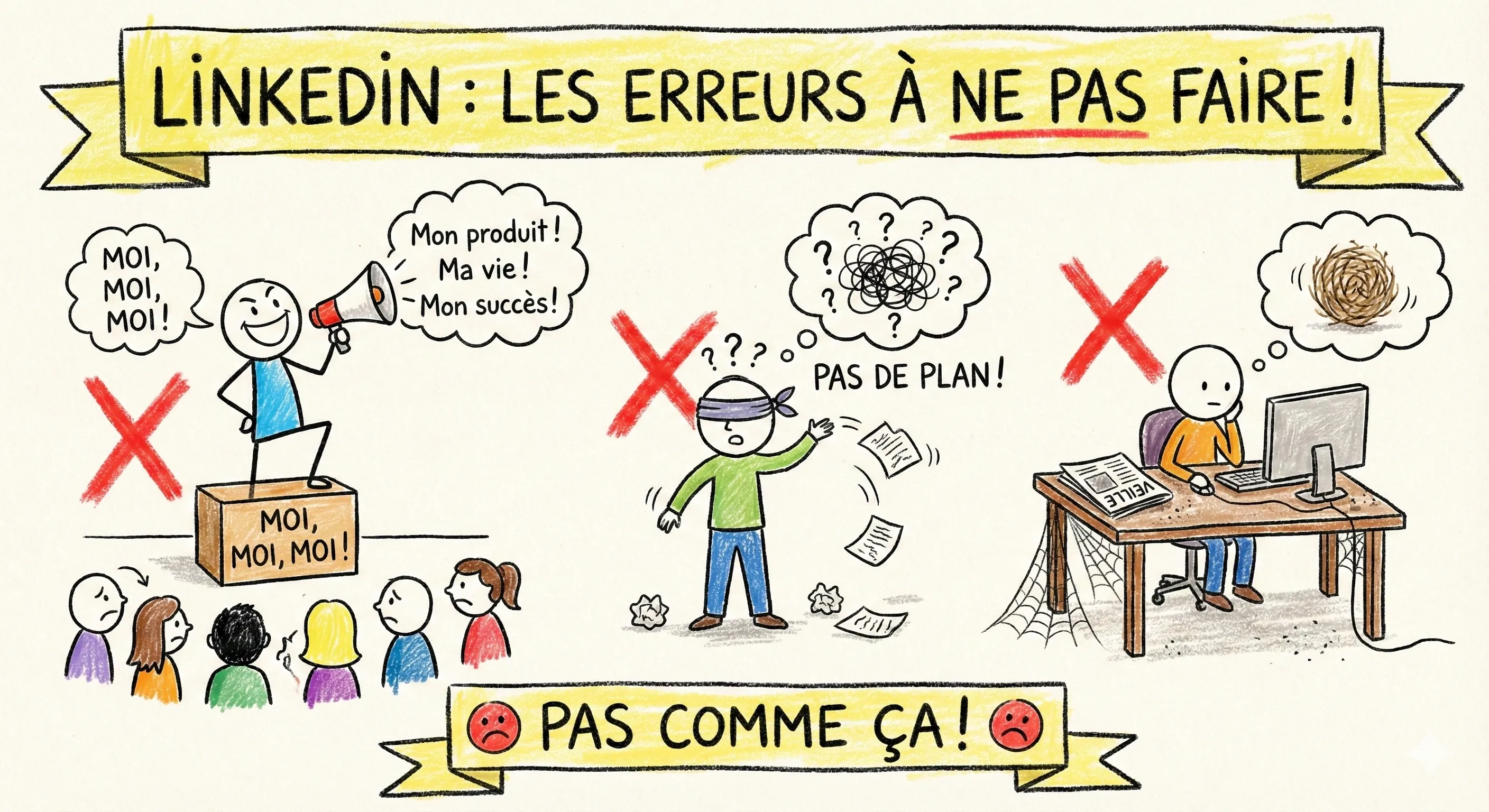
Posting on LinkedIn without getting results can quickly become frustrating. Yet, in 90% of cases, the culprit is neither the algorithm nor the posting time, but the very construction of your message.
Here are the 4 pillars to correct to turn your audience into an active community.
1. Lack of Clarity: The Number 1 Enemy of Attention
The LinkedIn reader is in a hurry. Posts that are too long, compact, or filled with secondary ideas lose the user within the first few seconds.
- THE GOLDEN RULE: 1 Post = 1 Idea.
- THE STRUCTURE: A striking hook, airy paragraphs (2-3 lines max), and a clear conclusion.
- THE TEST: If you can't understand the benefit of your post at a glance, it's too complex.
2. Lack of Perspective: Don't Be a Wikipedia Page
Relaying raw information or giving generic advice ("You must be kind") adds no value. People don't follow you for the information, but for your perspective on it.
- MOVE FROM INFO TO INSIGHT: Don't say "What", say "Why" and "How".
- DARE TO BE DIVISIVE: A good post doesn't try to please everyone. It should offer a sharp view of a problem.
- THE ANECDOTE: Use your personal experience to illustrate your advice. "Experience" always beats "Theory".
3. Editorial Inconsistency: The Credibility Killer
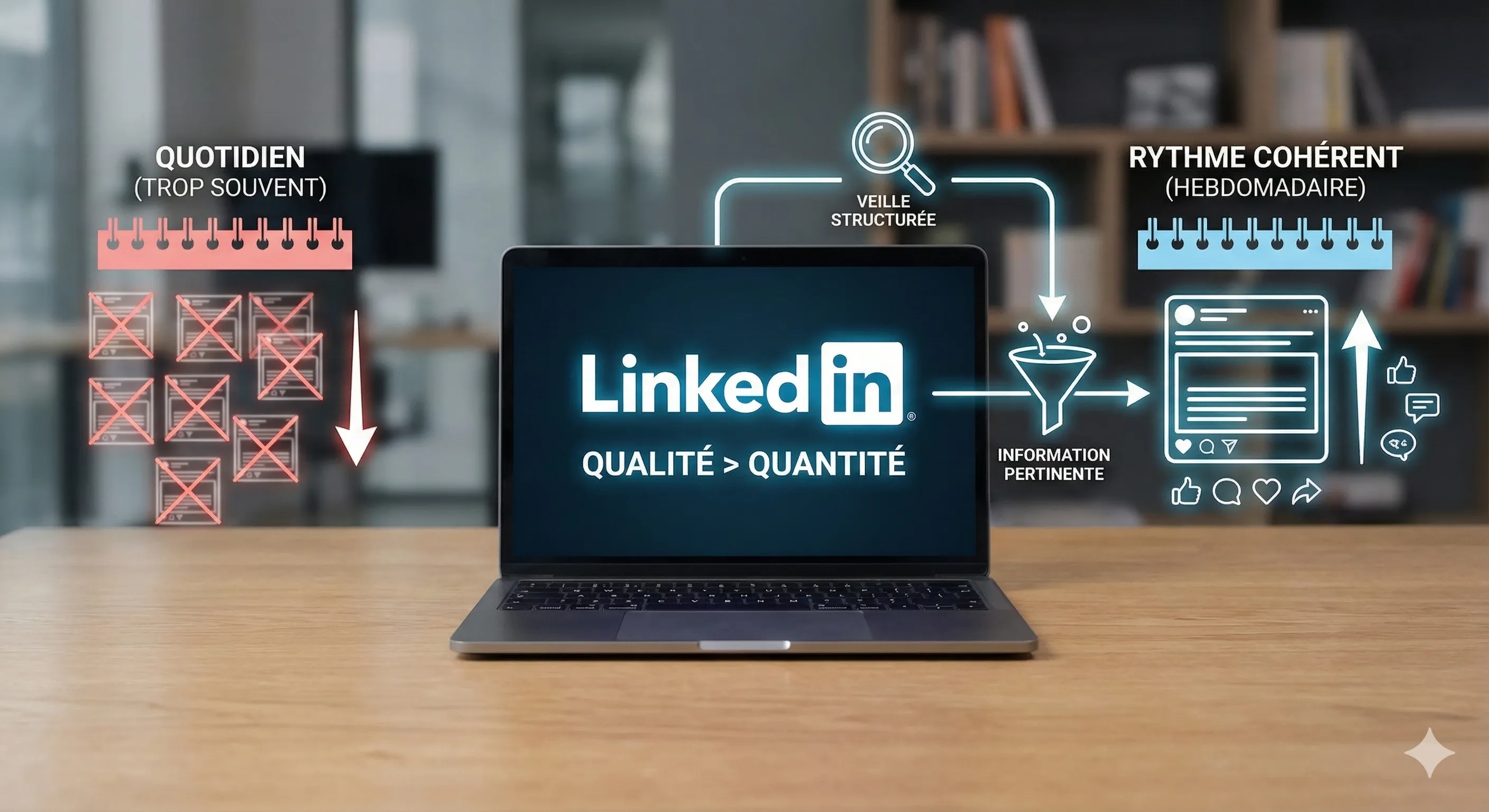
Success on LinkedIn relies on repetition. If you talk about cooking on Monday, SEO on Wednesday, and management on Friday, your audience no longer knows why they follow you.
- POSITIONING: Define a maximum of 2 or 3 content pillars.
- FREQUENCY: It's better to post twice a week consistently than 5 times in one week and then nothing for a month.
- TRUST: Regularity creates an invisible appointment that strengthens your authority in your field.
4. Market Disconnection: Avoid "Out-of-Touch" Posts
Many contents fail because they are disconnected from current sector concerns. Without monitoring, your posts become interchangeable.
- ACTIVE MONITORING: Identify current debates in your sector.
- REACTIVITY: Respond to a strong news story by bringing your expertise.
- THE "PAIN POINT": Talk about the problems your clients face TODAY, not those from three years ago.
Summary: Your Checklist Before Posting
Before clicking "Post", check these 4 points:
- Is my main message summarized in one sentence?
- Have I provided a personal opinion or original analysis?
- Does this post directly serve my main expertise?
- Is the format airy and pleasant to read on mobile?
Conclusion
To improve your performance, there's no need to publish more. Often, it's enough to simplify your message, assert your uniqueness, and stay grounded in the real issues of your audience.