LinkedIn Ads or Organic Content: Which to Choose in 2026?
You have a limited marketing budget and you are torn between LinkedIn Ads and organic content to generate B2B leads. This choice gets expensive when it is framed badly: a poorly calibrated ad budget runs dry in a few weeks, and an organic content plan without a method runs out of steam after three posts. Here you will find a side-by-side comparison of the two approaches, with numbers (cost per lead, time to results, content lifespan), and concrete criteria to decide based on your situation.
LinkedIn Ads: what they really cost
Cost per click on LinkedIn is among the highest in the B2B advertising market. An analysis of more than $700,000 in ad spend, published by Search Engine Land, puts LinkedIn's average CPC at $11.12, compared with $5.45 on Google Ads. The gap narrows on comparable campaigns: $13.94 for LinkedIn prospecting versus $12.48 for Google non-branded search. What you pay for is the precision of professional targeting (job title, industry, company size, seniority).
$11.12
average cost per click on LinkedIn Ads
$45 to $150
cost per lead depending on the ad format
$13.94
LinkedIn prospecting CPC, versus $12.48 on Google non-branded search
Cost per lead varies widely depending on the format. Lead Gen Forms paired with a document or image ad remain the cheapest, around 45 to 95 dollars per lead. Video ads and sponsored messages climb closer to 85 to 150 dollars. Account-based targeting (Matched Audiences) reportedly increases conversion rates by up to 32% compared with generic targeting.
The advantage of ads is speed: delivery starts as soon as the campaign is activated and stops just as fast. It is a short-term lever, not an asset that keeps producing once the budget is cut.
Organic content on LinkedIn: what it really costs
Organic content is not free, it simply shifts the cost from media budget to time spent on monitoring and writing. On this front, the numbers lean in its favor: the cost per organic B2B lead is reportedly around 164 dollars on average, compared with 310 dollars for comparable SaaS ad campaigns, a gap of nearly 47%.
Engagement follows the same trend. The average interaction rate of an organic post is between 2 and 6%, while the CTR of a sponsored ad in the feed tends to sit around 0.4 to 0.6%. The sharpest gap concerns how reach is distributed: personal posts capture about 39% of the LinkedIn feed, compared with 1 to 2% for company pages. A post published by an employee, then shared by colleagues, therefore naturally reaches far more people than an isolated brand post.
Why company pages underperform
LinkedIn favors personal accounts in its algorithm: an active employee with around a thousand connections extends the company's reach far more effectively than a brand page posting alone. Getting several profiles to post, not just the company page, really changes the game.
The real cost of organic content is consistency. A single post produces almost nothing: results show up after several weeks, sometimes several months, of continuous publishing, the time it takes for the algorithm and your audience to identify your account as a reliable source on your topic.
Side-by-side comparison: LinkedIn Ads vs organic content
| Criterion | LinkedIn Ads | Organic content |
|---|---|---|
| Cost per lead (B2B) | $45 to $310 depending on the format | around $164 on average |
| Time to results | Immediate once activated | Several weeks to several months |
| Lifespan | Stops with the budget | Keeps generating traffic after publishing |
| Reach | Precise targeting, cold audience | Depends on shares, more engaged audience |
| Effort required | Budget and campaign setup | Editorial consistency and writing time |
| Control | Full control of targeting and timing | Subject to the algorithm |
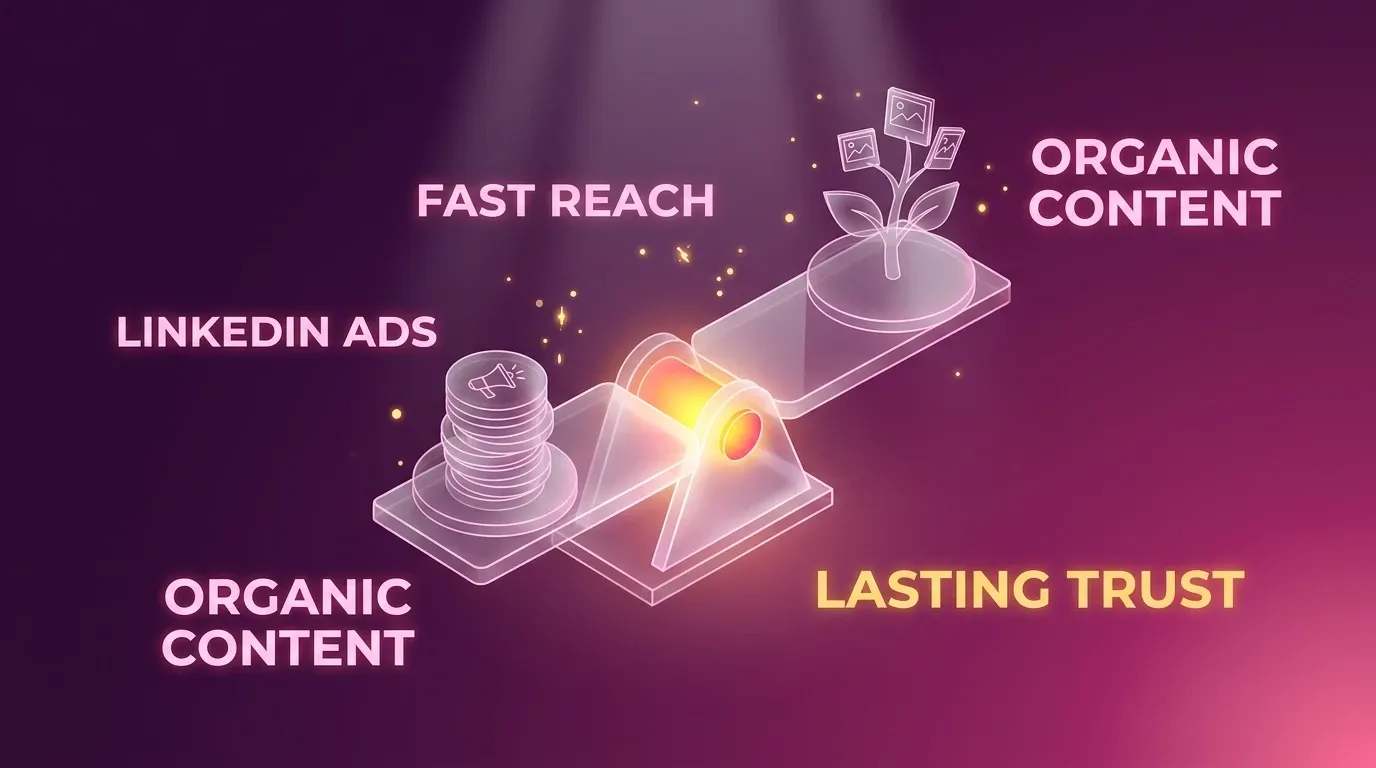
Neither lever wins on every criterion at once, which explains why the question comes up so often: the right choice depends on your goal of the moment, not on one being generally better than the other.
When to choose LinkedIn Ads
Ads make the most sense in specific situations:
- A dated event: a webinar, trade show or product launch, where you need sign-ups before a fixed date.
- A quarter-end to accelerate: when the sales pipeline needs filling fast and organic will not have time to ramp up.
- Retargeting an already warm audience: website visitors, imported CRM lists, newsletter subscribers, who convert better than a cold audience.
- Targeted recruiting: reaching specific profiles by job title or industry, faster than waiting for them to come across an organic post.
If you are running these campaigns for the first time, start with Lead Gen Forms paired with an image or document ad: it is the least expensive combination to get a first usable volume of data.
When to bet on organic content
Organic content remains the right choice in most long-term situations:
- A limited or nonexistent ad budget, where every dollar has to be justified before it goes into ads.
- Building a personal brand or expert credibility, which plays out over time and is hard to achieve with a single ad format.
- Nurturing before conversion: a prospect who has followed your content for several weeks is much more receptive to a sales follow-up or a retargeting ad.
- An industry where the audience distrusts direct advertising, where a useful post converts better than a sponsored format perceived as intrusive.
It is also the healthiest foundation before investing in advertising: an audience already built through organic content naturally lowers the cost of future paid retargeting.
The hybrid strategy that works best in 2026
Pitting the two levers against each other makes little sense: most B2B accounts that perform on LinkedIn combine a regular organic base with occasional ad campaigns. Here is how to build that combination without spreading your budget too thin.
Set up a regular organic editorial line
Before considering any paid campaign, make sure you publish consistently. Structured industry monitoring that follows your sources (blogs, YouTube channels, reference LinkedIn accounts) feeds an editorial calendar without depending on a flash of inspiration.
Spot the posts that perform and sponsor them
When a personal post clearly beats your average engagement, that is a signal: sponsor it through Thought Leader Ads rather than creating a brand ad from scratch. This format keeps the native look of the post, which preserves the credibility that made it an organic success.
Set aside an ad budget for specific moments
Keep a dedicated budget for launches, trade shows and quarter-ends, separate from the content budget. That is where ads are most profitable, on an audience already warmed up by your organic posts.
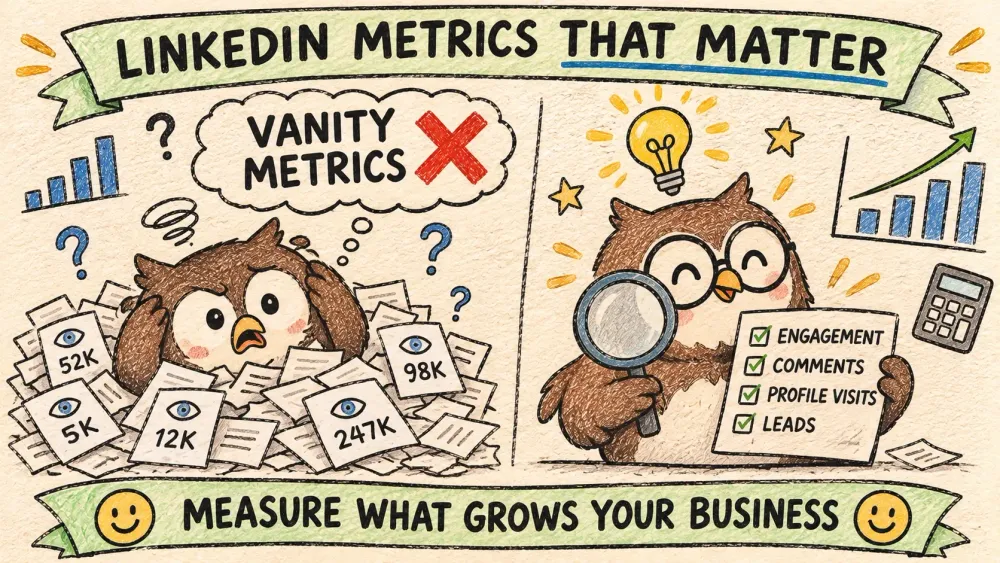
Measure both channels separately
Track the cost per lead and conversion rate of each channel independently: well-chosen LinkedIn statistics keep you from wrongly attributing a paid result to your organic content, or the other way around.
Building that organic base remains the most structural project: it determines the cost of your future ad campaigns far more than the other way around. A LinkedIn sales funnel that starts with useful content converts better than one that starts directly from a cold audience reached by an ad.
Frequently asked questions
No, LinkedIn does not impose a minimum budget: you set your own bid and daily budget in Campaign Manager. In practice, plan for a few dozen dollars a day over several weeks to get enough data to adjust your targeting.
Key takeaways
LinkedIn Ads and organic content do not meet the same need. Ads accelerate a specific moment at a high cost per lead, with results that stop when the budget does. Organic content costs time rather than money, but builds an asset that keeps producing leads after publishing, at a generally lower cost per lead. Most B2B accounts that succeed on LinkedIn do not choose: they build organic continuously and keep ads for the moments when speed matters more than budget.