LinkedIn Sales Funnel: A Practical Guide for 2026
LinkedIn Sales Funnel: A Practical Guide for 2026
You post on LinkedIn regularly, your audience is growing, and yet your posts almost never turn into a sales call or a signed client. It is usually not a content problem but a structure problem: without a sales funnel, each post goes nowhere instead of feeding a progression.
In this guide: the three stages of a LinkedIn sales funnel, the type of content to publish at each one, how to move a follower from one stage to the next, the metrics that tell you whether the funnel works, and the mistakes that break it before it has a chance to convert.
What is a LinkedIn sales funnel?
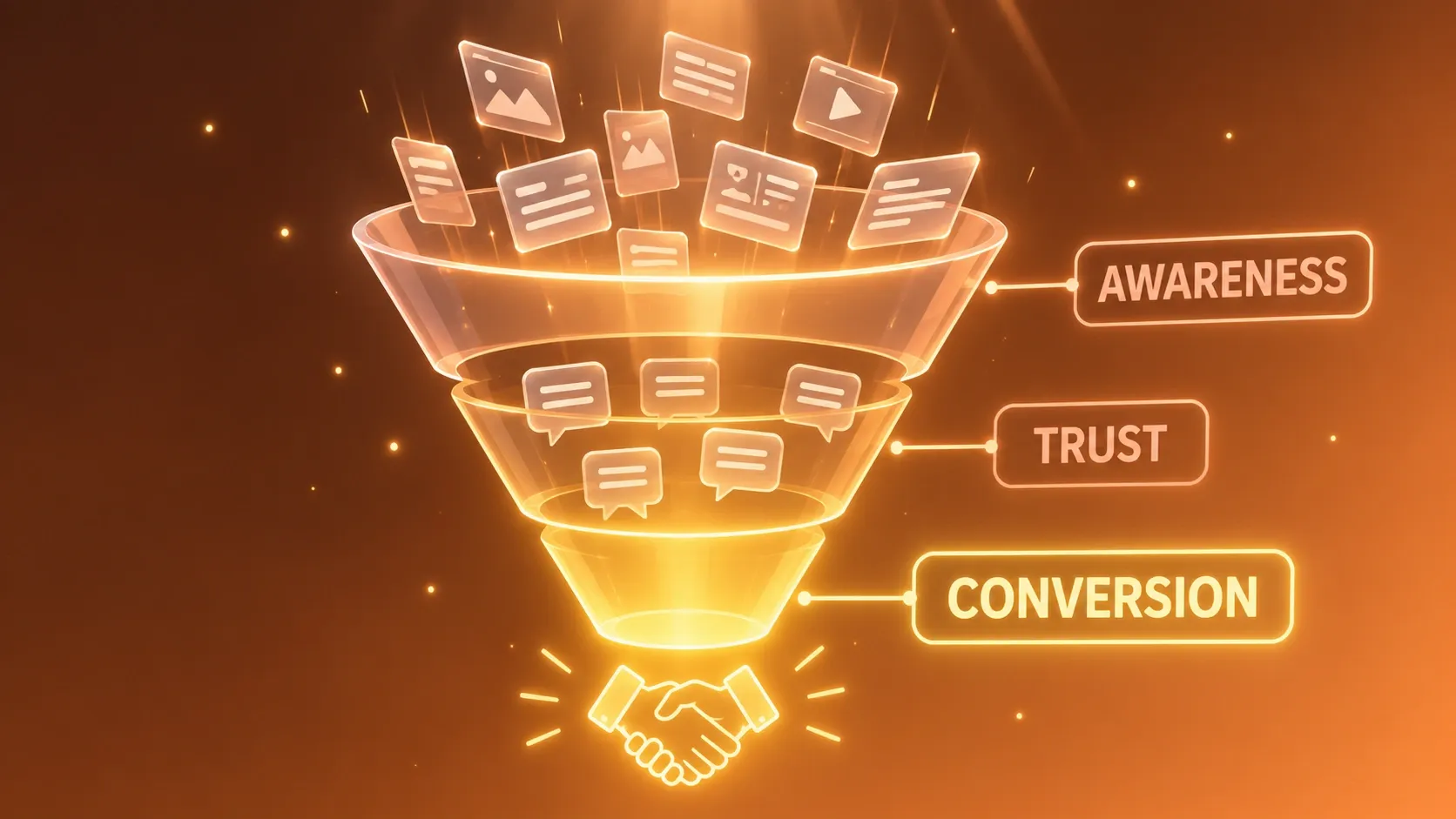
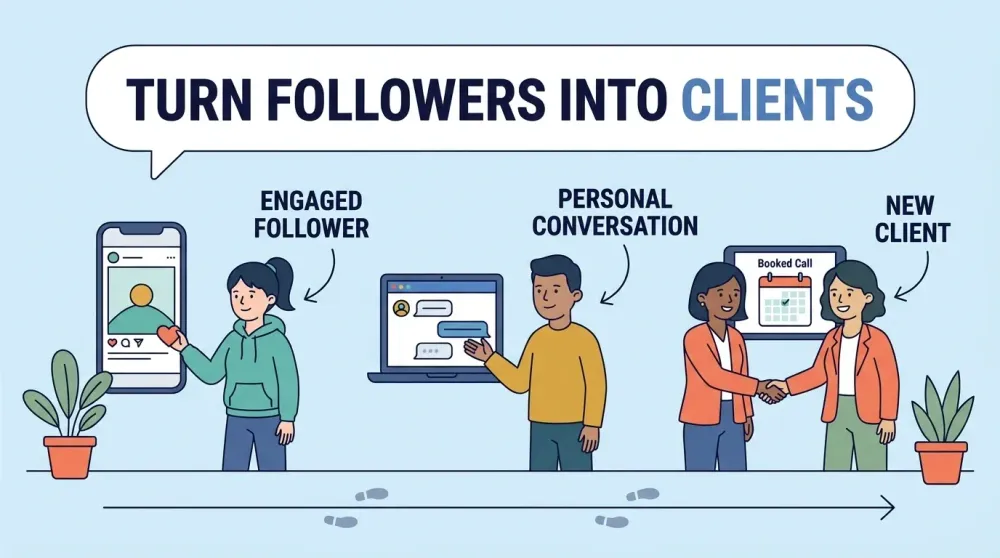
A LinkedIn sales funnel organizes your content into three stages, awareness, trust and conversion, so that a stranger gradually becomes a prospect, then a client. Unlike a classic advertising funnel, it relies on organic content and real interactions, not on automated private message sequences.
The core idea: a follower who discovers your profile today is not ready to buy, and a post that sells directly at that point drives them away. The funnel exists so you do not skip that stage, by giving each person the content that fits where they are in the relationship.
B2B decision makers consume five pieces of content on average before making a decision, according to a CMO Council study cited by LinkedIn Sales Solutions. Without a structured funnel, those five pieces are scattered and uneven. With one, they form a coherent path.
The 3 stages of a LinkedIn sales funnel
Top of the funnel: build awareness
At this stage, the only goal is to be seen by the right people, not to sell. The content should be useful or interesting regardless of your offer: a take on an industry trend, a lesson learned, a data point with commentary.
This is the most consumed type of content on LinkedIn, and the one that drives organic reach. A top-of-funnel post that never mentions your product can still be the most profitable one in the funnel, because it recruits the followers who will later move down the next stages.
Middle of the funnel: build trust
Once a follower follows you or interacts regularly, they enter the middle of the funnel. The content changes: case studies, behind the scenes of your method, answers to common objections, demonstrations of your expertise on a specific problem rather than the industry in general.
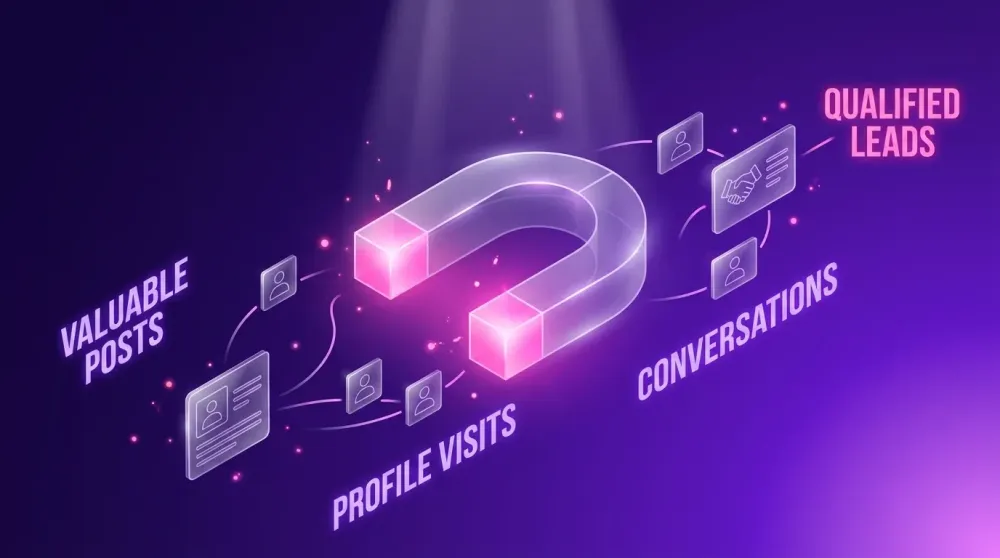
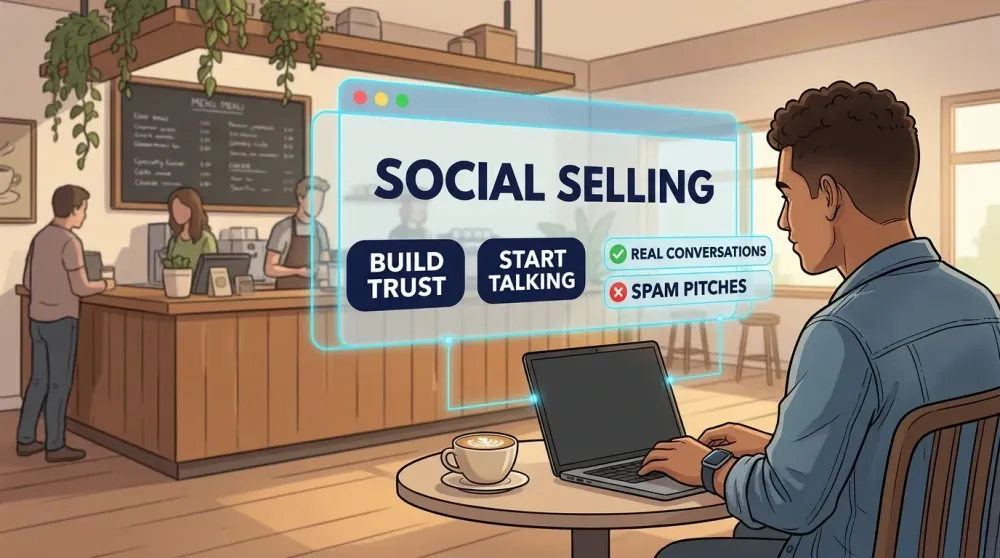
This is where the social selling method comes into its own: commenting on your prospects' posts, replying in depth to those who react to yours, keeping a conversation going before any sales pitch.
Bottom of the funnel: trigger conversion
At the bottom of the funnel are the people who already know your work and have shown a signal of interest (a DM, a request for a resource, a specific comment about your offer). The content can finally be direct: a quantified case study, a testimonial, a trial offer, an invitation to talk.
It is also the most fragile stage: using it on a follower who has not gone through the first two produces the opposite effect, an unfollow or silence.
What content to publish at each stage?
| Stage | Type of content | Goal | Progression signal |
|---|---|---|---|
| Top of funnel | Industry take, data with commentary, lesson learned | Reach and awareness | Profile view, new follower |
| Middle of funnel | Case study, behind the scenes, answer to an objection | Trust and recall | Comment, share, spontaneous DM |
| Bottom of funnel | Quantified proof, testimonial, trial offer | Conversion | Demo request, click on a signup link |
In practice, the challenge is not knowing what to write at each stage, but keeping up the pace on all three at once. That is where automated industry monitoring saves time at the top of the funnel: turning an article or video spotted in your monitoring into a publishable take saves you from starting from a blank page every week.
Moving a follower through the funnel
A LinkedIn sales funnel does not move a follower down automatically: an interaction moves them from one stage to the next, not the number of posts they have scrolled past in their feed.
Three concrete levers:
- The contextual lead magnet. Offering a resource (checklist, template, mini-guide) in a comment or at the end of a post brings the genuinely interested people into your DMs, without forcing anyone.
- The comment that opens a conversation. Replying to a comment with a question rather than a simple thank-you turns a passive interaction into an exchange, and moves the follower into the middle of the funnel.
- The DM that comes after the signal, not before. Messaging someone who has interacted two or three times gets a very different response rate from a message sent to a brand-new connection. That is the whole point of a lead generation strategy built on content rather than on the volume of messages sent.
Conversely, an automated message sequence sent to every new connection ignores where each person really is in the funnel, and exposes the account to LinkedIn restrictions. A content-driven sales funnel takes longer to build, but it does not put your account at risk.
Measuring your LinkedIn sales funnel
Tracking only follower count tells you nothing about the state of the funnel: you can have a large audience and no conversions if all your content stays stuck at the top.
| Stage | Metric to track | What it reveals |
|---|---|---|
| Top of funnel | Impressions, profile views, new followers | The reach of awareness content |
| Middle of funnel | Engagement rate, qualified comments, shares | The trust you have built |
| Bottom of funnel | Inbound DMs, clicks on the signup link, meetings booked | Actual conversion |
If the top of the funnel is strong but nothing flows down, the problem is often in the middle: not enough content that gives people a reason to talk privately. If the bottom stalls despite plenty of DMs, the problem is more likely the offer or the timing of the proposal, not the content.
Mistakes that break a LinkedIn sales funnel
- Selling from the first contact. A sales post or message sent to someone who has barely discovered your profile hits a wall, because there is no trust yet.
- Publishing the same type of post over and over. A funnel that contains only top-of-funnel content (general takes) or only bottom-of-funnel content (promotion) moves no one forward.
- Automating connection requests and follow-up messages. It artificially fills the top of the funnel, at the cost of credibility in the middle that does not hold, and a real risk to the account.
- Never giving a clear next step. A top-of-funnel post does not need a sales call to action, but a bottom-of-funnel post with no invitation at all (DM, link, open question) leaves a follower who is ready to convert with no door to push.
- Treating all followers the same way. Someone who has commented every week for six months does not need the same content as someone who just followed you.
Checklist to build your LinkedIn sales funnel
Map your existing content
Take your last twenty posts and sort them into top, middle or bottom of funnel. The split often reveals an imbalance.
Set a pace for each stage
A simple rhythm that works for most profiles: two top-of-funnel posts, one middle-of-funnel post and one bottom-of-funnel post per week.
Add a progression signal to every post
A question at the end of a post, a lead magnet in a comment, or an invitation to talk: every post should offer a concrete way to move forward in the funnel.
Qualify before reaching out privately
Keep sales DMs for people who have already interacted several times, never for new connections.
Track the three metrics, not just follower count
Look at reach, qualified engagement and conversion signals separately each week to know where to step in.
Frequently asked questions
Allow several weeks, sometimes one to two months, to see the first conversions, the time it takes for followers to move from the top to the bottom of the funnel. Consistency of content matters more than speed.
Key takeaways
A LinkedIn sales funnel does not require more content, just better-distributed content: some to be seen, some to build trust, and only a small part to convert. Progress is built through interactions, not automated sequences, and measured stage by stage rather than by follower count alone.
Want to post regularly across all three stages without giving up your evenings? Start for free, no credit card required.